
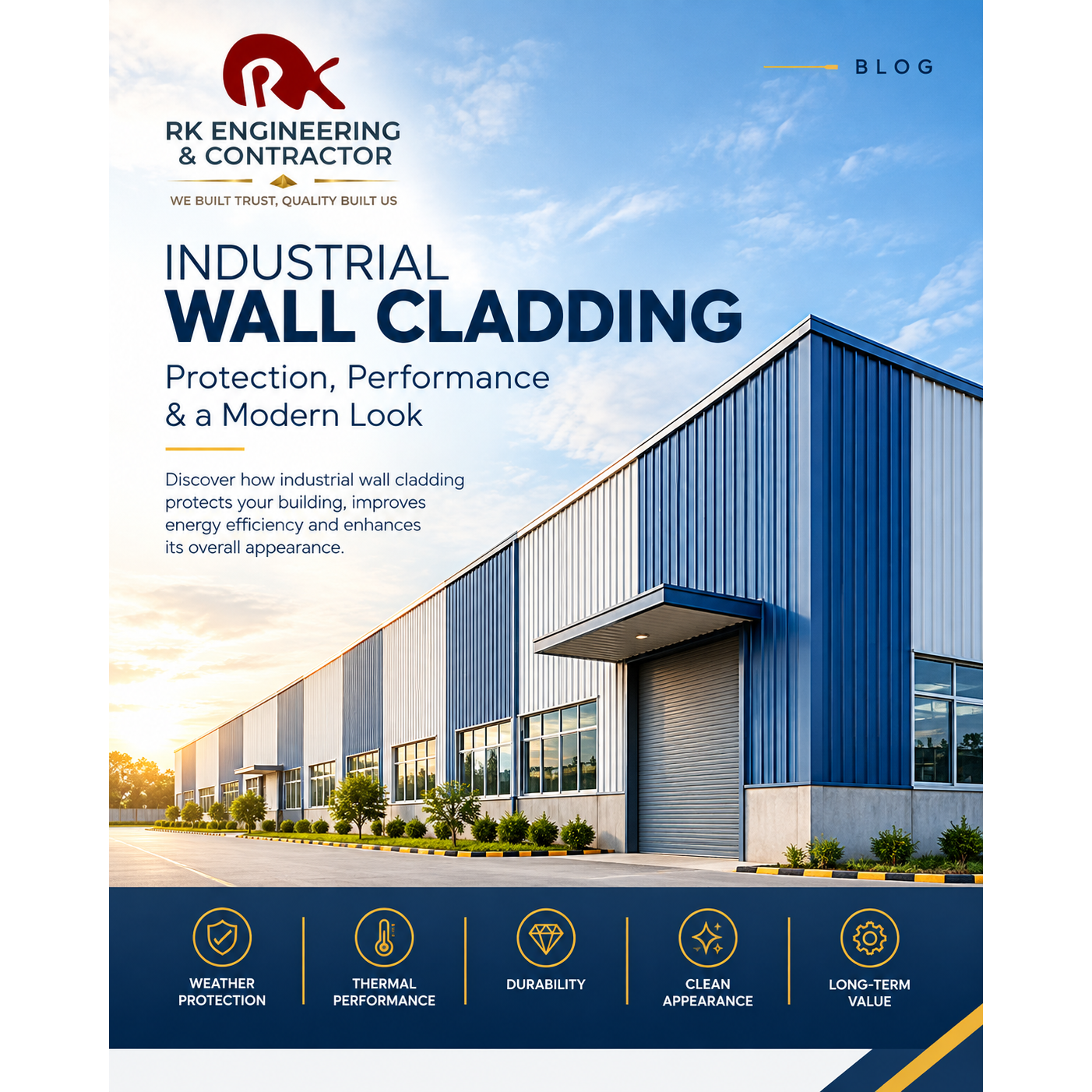
Industrial wall cladding is an important part of modern factories, warehouses, industrial sheds and commercial buildings. It forms the external wall envelope and helps protect the building from weather conditions while contributing to durability, thermal performance and overall appearance.
The right cladding system depends on the building's purpose, location, structural design, insulation requirements and operating conditions.
What Is Industrial Wall Cladding?
Industrial wall cladding refers to metal sheets or panels installed on the external walls of a building. It is commonly used with PEB and structural steel buildings to create a practical and durable building envelope.
Depending on the project, cladding can be used as a single-skin system or combined with insulation and other wall components.
Why Is Wall Cladding Important?
Wall cladding does more than provide an attractive external finish. A properly designed and installed cladding system can help provide:
Protection from rain, wind and dust
Improved building durability
Better thermal performance when insulation is included
A clean and professional appearance
Efficient enclosure of large industrial buildings
Easy coordination with doors, windows and other building openings
Common Applications of Industrial Wall Cladding
Wall cladding is widely used in different types of industrial and commercial facilities, including:
Factories
Manufacturing facilities require durable external walls that can protect the building and support the operational requirements of the facility.
Warehouses
Cladding provides an efficient enclosure for storage buildings while allowing integration with roofing, ventilation and loading areas.
Industrial Sheds
Metal wall cladding is commonly used for industrial sheds because it can provide a practical and lightweight external enclosure.
Commercial & Institutional Buildings
With suitable profiles, colours and finishes, metal cladding can also be used where appearance is an important consideration.
Roofing and Wall Cladding Work Together
Roofing and wall cladding form an interconnected building envelope. Their junctions require proper planning and detailing.
Important areas include:
Roof-to-wall connections
Corners
Flashings
Doors and windows
Gutters and drainage
Ridge and eave details
Ventilation openings
Insulation continuity
Proper coordination helps reduce the risk of water ingress and ensures a cleaner finished installation.
Insulated Wall Cladding
Where thermal control is required, wall cladding can be combined with an insulation system.
Insulated wall systems can help reduce heat transfer between the outside and inside of the building. The type and thickness of insulation should be selected according to the building's requirements, local conditions and applicable specifications.
This can be particularly relevant for factories, warehouses and other facilities where indoor temperature conditions are important.
Factors to Consider When Choosing Wall Cladding
There is no single cladding solution suitable for every building. Selection should consider:
Building purpose
Local weather conditions
Required thermal performance
Structural requirements
Sheet material and thickness
Protective coating
Insulation requirements
Maintenance requirements
Building appearance
Project budget
The cladding system should be selected as part of the overall building design rather than considered separately.
Importance of Proper Installation
The performance of wall cladding depends not only on the material but also on correct installation.
Panel alignment, fixing, overlaps, flashings, corners, openings and junction details should be completed according to the approved design and manufacturer's requirements.
Coordination between the civil, structural, roofing and cladding teams is also important for achieving a properly finished industrial building.
RKEC Industrial Wall Cladding Solutions
RK Engineering & Contractor (RKEC) provides industrial roofing and wall cladding solutions as part of its construction capabilities.
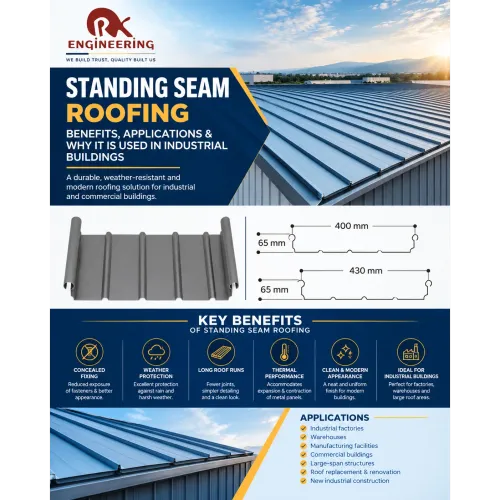
Our work includes industrial wall cladding, profile roofing, standing seam roofing, insulated roofing, ventilation and associated roofing works, along with industrial civil construction, RCC foundations, PEB and structural steel, deck slab construction and industrial flooring.
We focus on project requirements, material coordination, quality control and safe execution to deliver practical solutions for factories, warehouses and industrial facilities.
Conclusion
Industrial wall cladding plays an important role in protecting and enclosing modern industrial buildings. The right system can contribute to weather protection, durability, thermal performance and a professional appearance.
Whether it is a factory, warehouse or industrial shed, proper selection, detailing and installation are essential for reliable long-term performance.
Planning a factory, warehouse or industrial building? Contact RKEC to discus